
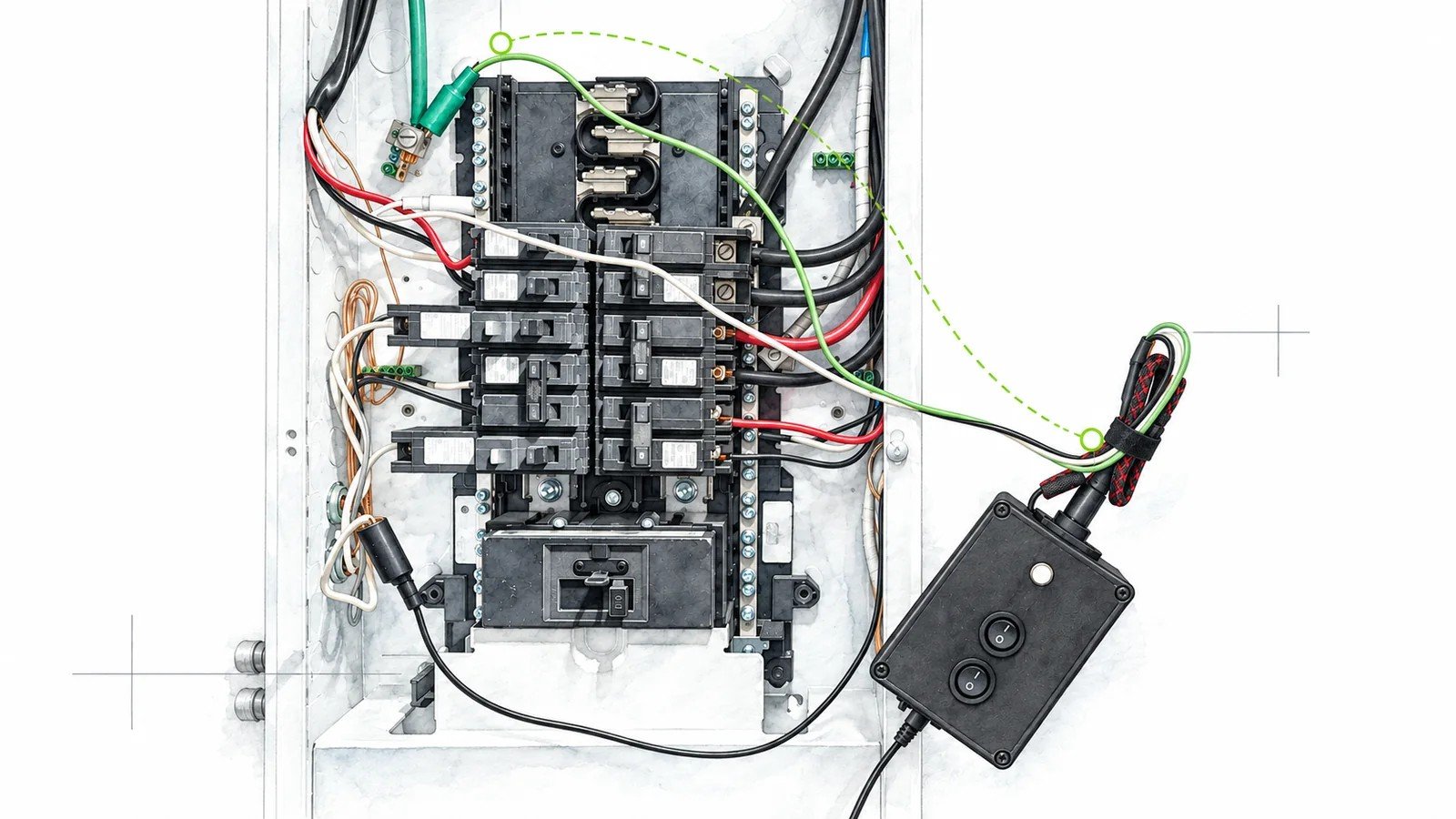
TOOLS · FOR LICENSED ELECTRICIANS
Wire Scout
A simple tool for electricians to find the most common wiring errors that create magnetic fields.
At the electrical panel, the EMF Wire Scout shows which circuits have a neutral-to-ground connection or neutrals mixed with another branch circuit, and confirms when they have been corrected.
$299 USD + $45 shipping to Canada and the US
Currently sold out. Expected back in stock by the end of October 2026.
EMF Wire Scout at a glance
- Who it is for
- Licensed electricians only
- What it finds
- Neutral-to-ground (N-G) connections and neutrals shared between branch circuits (N-N)
- What it cannot find
- Three very rare wiring errors that need an amp clamp and a magnetic field meter
- Where it is used
- At the electrical panel, on indoor de-energized circuits only
- Model
- Version B
- Power
- 120V AC input, 12V AC at 0.5 A output. Needs an AC source such as a battery pack (not included)
- Price
- $299 USD + $45 shipping to Canada and the US
- Availability
- Currently sold out. Expected back in stock by the end of October 2026.
- Delivery
- Within 2 weeks of receiving payment, for in-stock items
- Returns
- 60 days
- Warranty
- 1 year
- Manufactured by
- EMF Aware Inc.
WHAT IT DOES
How the Wire Scout finds neutral-to-ground and shared neutral wiring errors.
Current is supposed to return to the panel on the same cable it left on. When a neutral is tied to ground somewhere other than the panel, or neutrals from different branch circuits are joined, part of the return current takes another route and an elevated AC magnetic field shows up in the rooms those wires pass through.
- Neutral to ground (N-G): a branch circuit whose neutral is connected to ground.
- Mixed neutrals (N-N): a neutral interconnected with the neutral of another branch circuit.
The Wire Scout is used at the panel, one circuit at a time. It tells the electrician which circuits have an error and which kind it is, so the wiring can be corrected. After the correction, the same test confirms it is gone. Both errors also violate the National Electrical Code and the Canadian Electrical Code.
What it cannot find
There are three very rare types of wiring error that also create magnetic fields and that the Wire Scout cannot detect. They have to be identified and corrected with an amp clamp and a magnetic field meter.
A clean result on the Wire Scout means the N-G and N-N errors are gone. It does not by itself mean the magnetic field in the home is low, so measure after the work.
- What is in the kit
- Colour-coded test lead ports
- The control box
- Powered from a battery pack
Press a photo to enlarge it. These show the current version.
COMPARISON
Wire Scout, Blue Box and a multimeter.
| Feature | 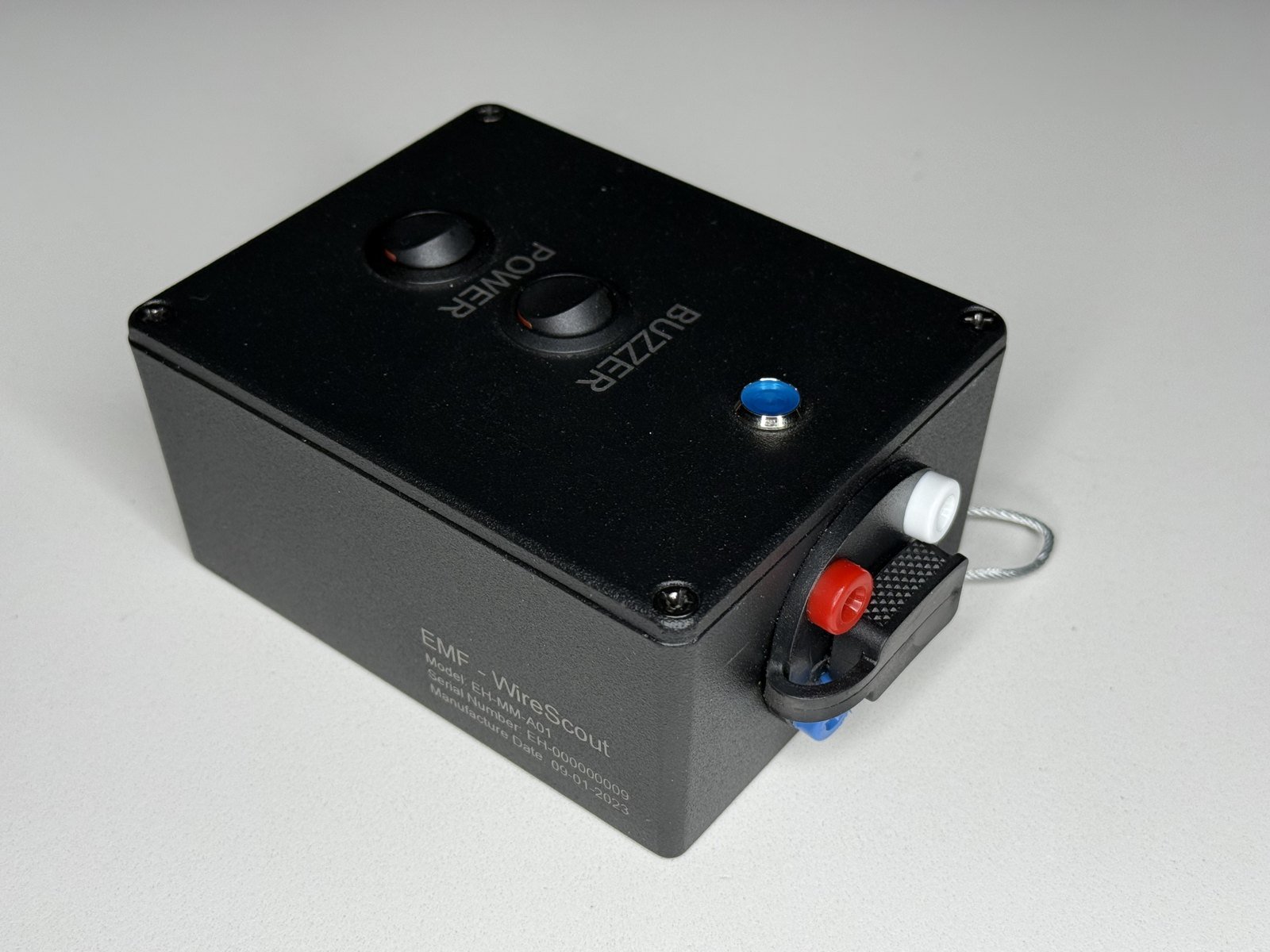 | 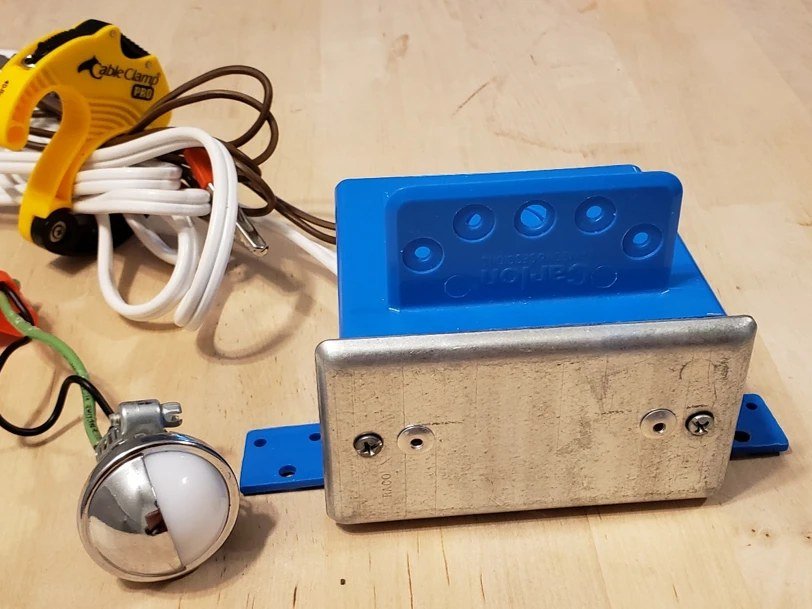 | 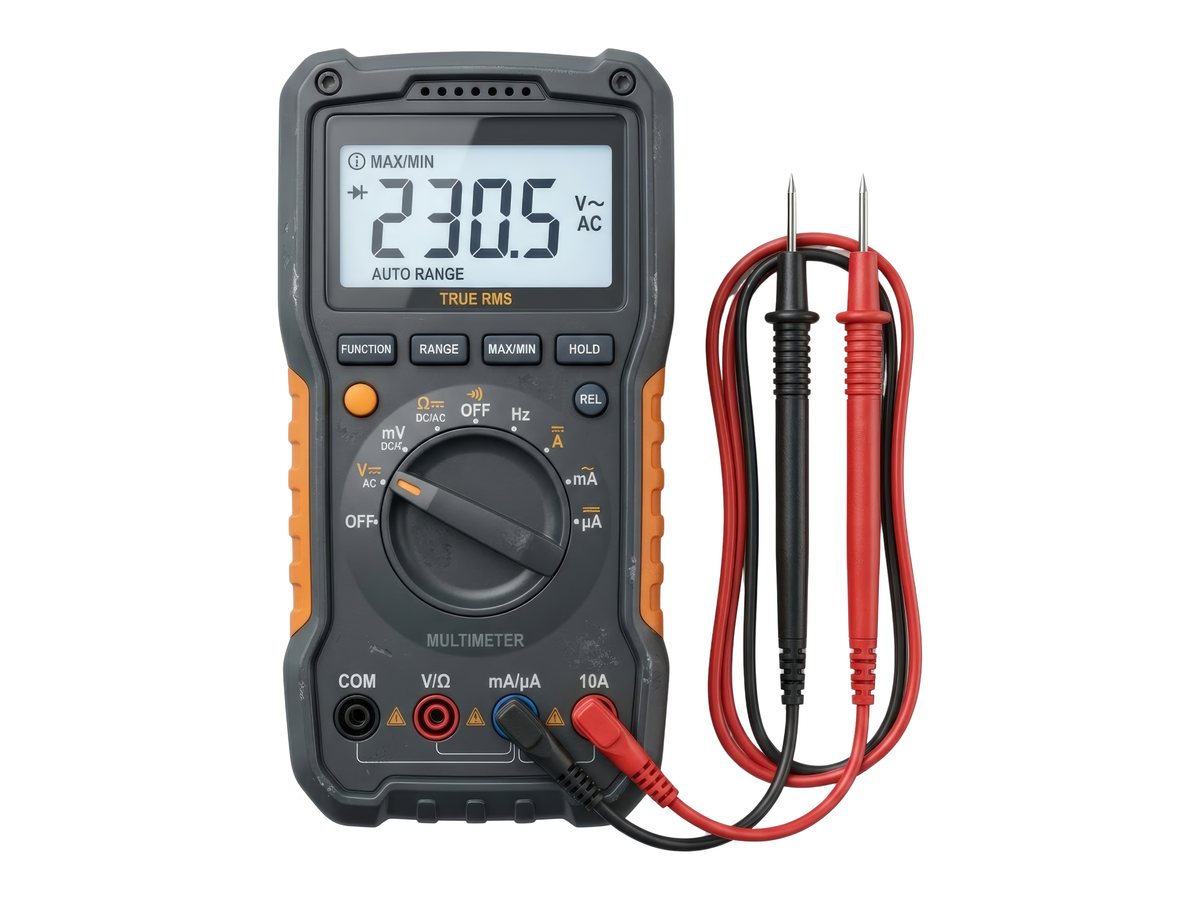 |
|---|---|---|---|
| Runs cool | Yes | No | Yes |
| Bright wiring error indication light | Yes | Yes | No |
| Buzzer wiring error indicator | Yes | No | Yes |
| Easy to trace with a buzz stick or AC magnetic field meter | Yes | Yes | No |
| Up to 4 leads for faster wire error verification | Yes | No | No |
| Easily detects errors in large homes with long branch circuit runs | Yes | Yes | No |
| Professional looking | Yes | No | Yes |
The Wire Scout is also more sensitive than the Blue Box. The buzzer and light together catch what the Blue Box catches (below about 100 ohms), and the light alone catches errors up to about 220 ohms that the Blue Box misses.
What is a Blue Box tester?
The Blue Box is an electrician's continuity checker and circuit tracer for finding wiring errors. Spark Burmaster designed it, and the Wire Scout builds on it. It is also a tool for licensed electricians only.
- It sends 12V AC through the circuit, from a 120V to 12V transformer, instead of the DC voltage most continuity testers use. DC can be present on an electrical system and throw off the result, and on long runs in larger homes a DC tester may not be effective because of voltage drop.
- It passes about 0.5 amps, a strong enough signal to trace the problem circuit with a buzz stick or a magnetic field meter.
- A lamp lights when it finds a path. It is built from a blue single-gang electrical box, a transformer and an incandescent lamp, and it runs from a portable power source with all the breakers off.
SEE IT WORK
Basic wire error detection procedure.
A walk through connecting a Wire Scout at a panel and testing a branch circuit.
Older version. This video shows an earlier version of the Wire Scout, so the lead colours and ports differ from today's unit. A new video is coming soon. Follow the current manual for the connections.
The video plays from YouTube once you press play. Until then, nothing is loaded from YouTube.
HOW IT IS USED
One circuit at a time, with the panel off.
- Turn off every branch circuit breaker and the main breaker, then confirm with a multimeter that the panel and the circuits are dead.
- Plug in the leads and clip them on: yellow to the neutral bus, green to the ground bus, and the red lead free to test the circuit. Power the Wire Scout from a battery pack or other AC source.
- Lift one branch circuit neutral off the bus and touch the red lead to it. The buzzer and light, and what changes when you disconnect the yellow and green clips, tell you whether it is tied to ground (N-G), to another circuit's neutral (N-N), or both.
- Tag the circuits with errors, return every neutral to the bus, tighten the terminals, and re-energize the breakers one at a time. After the wiring is corrected, test the circuit again to verify.
This is an overview only. The User Manual V1.6 (PDF) has the full procedure, the connection diagrams and the table for reading the results. Follow it, and your local electrical code, when you use the tool.
Safety, from the manual
- Used by a licensed electrician only.
- Indoor, de-energized circuits only. Energized circuits will damage the device.
- Not for outdoor use or wet conditions.
- De-energize the whole panel before starting. Wear personal protective equipment, at minimum rubber-soled shoes, safety glasses and insulated gloves.
Specifications
- Input: 120V AC. Output: 12V AC at 0.5 Amps
- Buzzer and light together: below about 100 ohms. Light alone: about 100 to 220 ohms
- Test leads: red (circuit under test), yellow (neutral bus), green (ground bus), plus an optional blue lead
- Needs an AC source, such as a battery pack with an AC outlet, and a work light
FREQUENTLY ASKED QUESTIONS
EMF Wire Scout questions, answered.
What is the EMF Wire Scout?
The EMF Wire Scout is a wiring error detector for licensed electricians. At the electrical panel it shows which branch circuits have a neutral-to-ground (N-G) connection or a neutral interconnected with another branch circuit (N-N), the common wiring errors behind elevated AC magnetic fields, and it confirms when they have been corrected.
Who can use the Wire Scout?
Only licensed electricians. It connects to the bus bars and branch circuit neutrals inside an electrical panel and is used only on indoor, de-energized circuits. If you are not a licensed electrician, do not open your panel. Hire a licensed electrician.
What wiring errors does the Wire Scout find?
It finds neutral-to-ground (N-G) connections and neutrals shared between branch circuits (N-N). Both violate the National Electrical Code and the Canadian Electrical Code. When the buzzer and light are both on, it has found an error less than 100 ohms, which is what a Blue Box finds. When only the light is on, the continuity has between 100 and 220 ohms of resistance, which a Blue Box misses.
What can the Wire Scout not find?
Three very rare types of wiring error also create magnetic fields, and the Wire Scout cannot detect them. They have to be identified and corrected with an amp clamp and a magnetic field meter. A clean result on the Wire Scout means the N-G and N-N errors are gone. It does not by itself mean the magnetic field in the home is low, so measure after the work.
Can I use the Wire Scout on live circuits?
No. Use it only on indoor, de-energized circuits. Using it on an energized circuit will damage the device. Turn off every branch circuit breaker and the main breaker, and confirm with a multimeter that the panel and the circuits are dead. Do not use it outdoors or in wet conditions. Wear personal protective equipment, at minimum rubber-soled shoes, safety glasses and insulated gloves.
What do I need to power the Wire Scout?
It runs from a 120V AC input and puts out 12V AC at 0.5 amps. With the panel off you need an AC outlet running from a battery pack, such as a portable power station or a cordless-tool battery with a top-off power supply. A work light such as a clamp-on LED lamp is also useful. The battery pack is not included.
How much does the Wire Scout cost and what is included?
The EMF Wire Scout (Version B) is $299 USD plus $45 shipping to Canada and the US. It includes an aluminum control box, colour-coded gator test leads and an AC power supply. A battery pack is not included. It comes with a 1 year warranty and is manufactured by EMF Aware Inc.
Is the Wire Scout in stock?
Currently sold out. Expected back in stock by the end of October 2026.
What is the return policy and how long does delivery take?
Return it within 60 days of delivery, in its original condition, for a full refund of the item price. Return shipping is paid by the buyer. Email [email protected] to start a return. In-stock Wire Scouts are delivered within 2 weeks of receiving payment. While the Wire Scout is sold out, orders ship once it is back in stock.
How do I order a Wire Scout?
Press Order Wire Scout on this page and fill in your name, phone number, email address, shipping address and quantity. We will email you an invoice and a payment link.
How is the Wire Scout different from a Blue Box tester?
The Wire Scout is more sensitive. It finds the same errors a Blue Box finds and also errors up to about 220 ohms that a Blue Box misses. It uses a bright LED that runs cool and a buzzer, where a Blue Box uses an incandescent lamp and has no buzzer, and it takes up to 4 leads for faster verification.
PRICE AND ORDERING
Wire Scout price and ordering.
$299 USD + $45 shipping to Canada and the US
Currently sold out. Expected back in stock by the end of October 2026.
Includes an aluminum control box, colour-coded gator test leads, and an AC power supply. Battery pack not included. The EMF Wire Scout (Version B) comes with a 1 year warranty and is manufactured by EMF Aware Inc. To order, fill in the invoice request form and we will email you an invoice. Questions? Email [email protected].
Delivery and returns
In-stock Wire Scouts are delivered within 2 weeks of receiving payment. While the Wire Scout is sold out, orders ship once it is back in stock.
Return it within 60 days of delivery, in its original condition, for a full refund of the item price. Return shipping is paid by the buyer. Email [email protected] to start a return.
Not included
When you cut power to the breaker panel, you will need an AC outlet running off a battery pack. A portable power station, or a cordless-tool battery with a top-off power supply, both work. A clamp-on LED lamp is worth having on hand too.
Designed by Mitch Marchand and Eddie Hiscock. Manufactured by EMF Aware Inc. It builds on the Spark Burmaster's original blue box design. Last updated 8 October 2026.
ELECTRICIANS
Order a Wire Scout.
Submit your details and we will email you an invoice. Questions about using the tool? Email [email protected].